Our Patients:
Jadai Williams
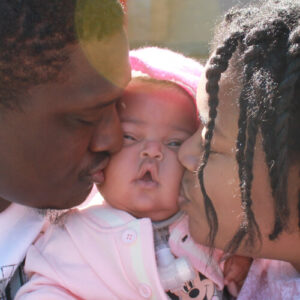
Masterfully navigating a baby in one arm and steering a stroller filled with medical equipment and monitors with the other, Deja Adams and her daughter, Jadai, emerged from their clinic appointment with reports of excellent progress. At 13 months old, Jadai is a sweet bundle of resilience, rocking her tracheostomy like it’s the cutest accessory ever.
“My pregnancy was high-risk. I had two prior miscarriages, I have a blood-clotting disorder, and I had suffered a stroke within months of becoming pregnant with Jadai. For the most part, I had fully recovered with the exception of having seizures from time to time. I was monitored very carefully since there was concern for seizures being an issue during my pregnancy. Fortunately, I never had one, but we traded that risk for another,” Deja said.
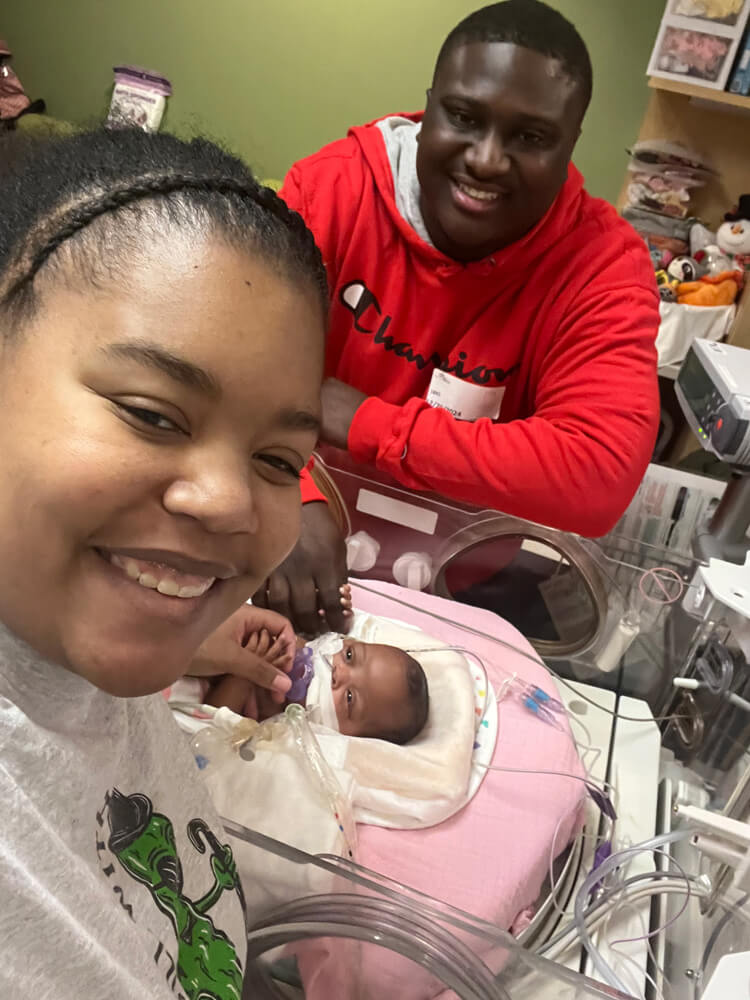
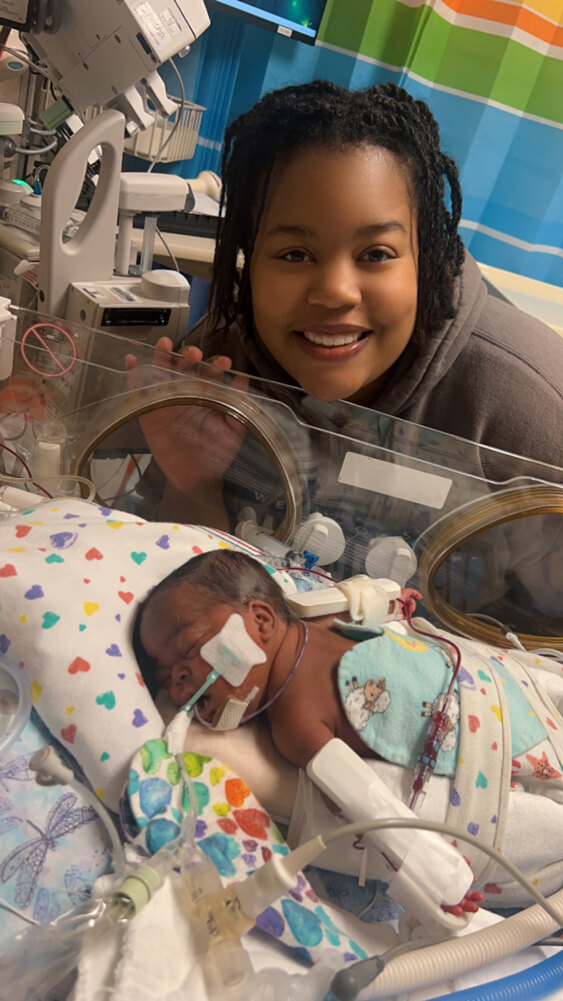
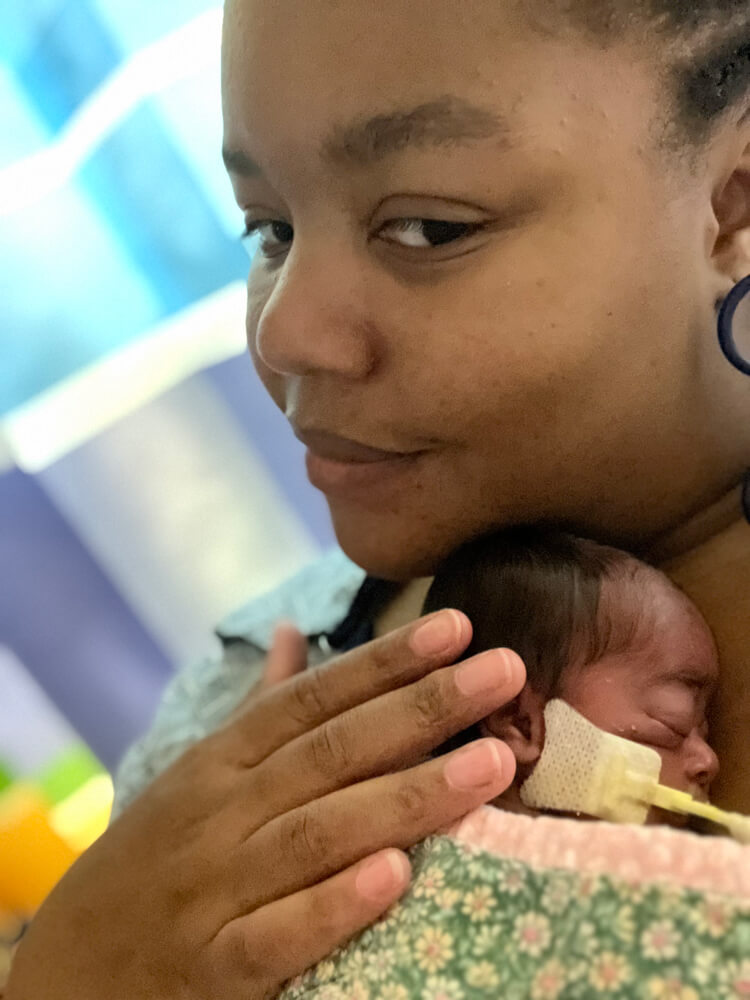
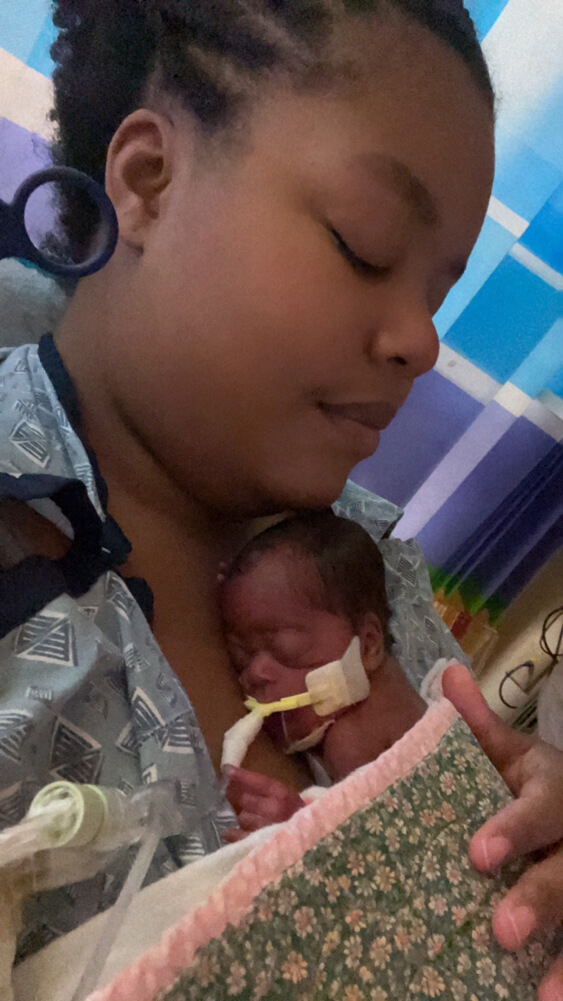
Throughout Deja’s pregnancy, the baby measured small in utero. Her placenta was thinner than normal, and her team cautioned that an early delivery should be anticipated. “I was admitted to SSM Health St. Mary’s when I was 24 weeks. I remember it was a Wednesday, and I delivered Jadai two days later on Friday, August 16, 2024. I spent two more days in the hospital because I lost so much blood. But Jadai was immediately transferred to Cardinal Glennon’s Neonatal Intensive Care Unit. She only weighed 1lb. 3 oz and she was small for gestational age at 25 weeks,” Deja said. “I was a first-time mom with no idea what to expect from a full-term baby, much less what to expect from a preemie.”
“The nurses were so great and reassuring, answering all my questions. It was scary to see her intubated, so many tubes, so tiny and so fragile. She needed bilirubin lights because her liver wasn’t fully developed and she needed heart surgery her first week of life to repair her PDA (patent ductus arteriosus),” Deja said. PDA is a congenital heart defect where a normal fetal blood vessel (the ductus arteriosus) stays open after birth, causing extra blood to flow from the aorta to the pulmonary artery, straining the heart and lungs, especially common in premature babies.
“For the first two months I wrote EVERYTHING down – every bowel movement, every ventilator setting, the names of every nurse . I didn’t stay every single night, but I DID come every single day. The biggest goals with Jadai were to get her extubated and to get her to gain weight. In October, I literally moved IN to the NICU. I decided to stay until she was discharged and also thought it would be helpful for us to learn each other as mother and daughter.
In November 2024, the team attempted to extubate Jadai. She had also self-extubated twice in the months leading up to November. “She failed to breathe on her own after any of these attempts and it was really traumatic to watch her struggle,” Deja said. “She was gaining weight and progressing in other ways, but her breathing wasn’t progressing.”
The team sat with Deja to discuss next steps. An airway scope followed, which confirmed that Jadai’s lungs weren’t inflating properly. She would eventually need a more complex reconstructive surgery, but the care team recommended that having a tracheostomy was truly the next best step for her to progress, grow and eventually go home. “These were definitely not the words that any mother wants to hear,” Deja said. “I had no idea what to expect and it was a whole new learning curve I wasn’t prepared for. I felt very alone, very scared and no mom I knew had ever been through anything like this,” said Deja.
Within days of discussing this plan, Deja was introduced to Samantha, a fellow NICU mom, whose daughter had received a tracheostomy just a few weeks prior. “I was so grateful to the neonatologist and the Footprints staff for making that introduction. Even with her own stress and challenges to deal with, Sammie helped me feel more comfortable and took me under her wing. She introduced me to her daughter and let me observe all of her care surrounding the trach. Before we knew it, we had developed a friendship. We were both first-time moms, both moms of medically complex daughters. We had very different journeys, but many of our struggles were the same. It’s the club neither of us wanted to be in, but didn’t have a choice,” Deja said.
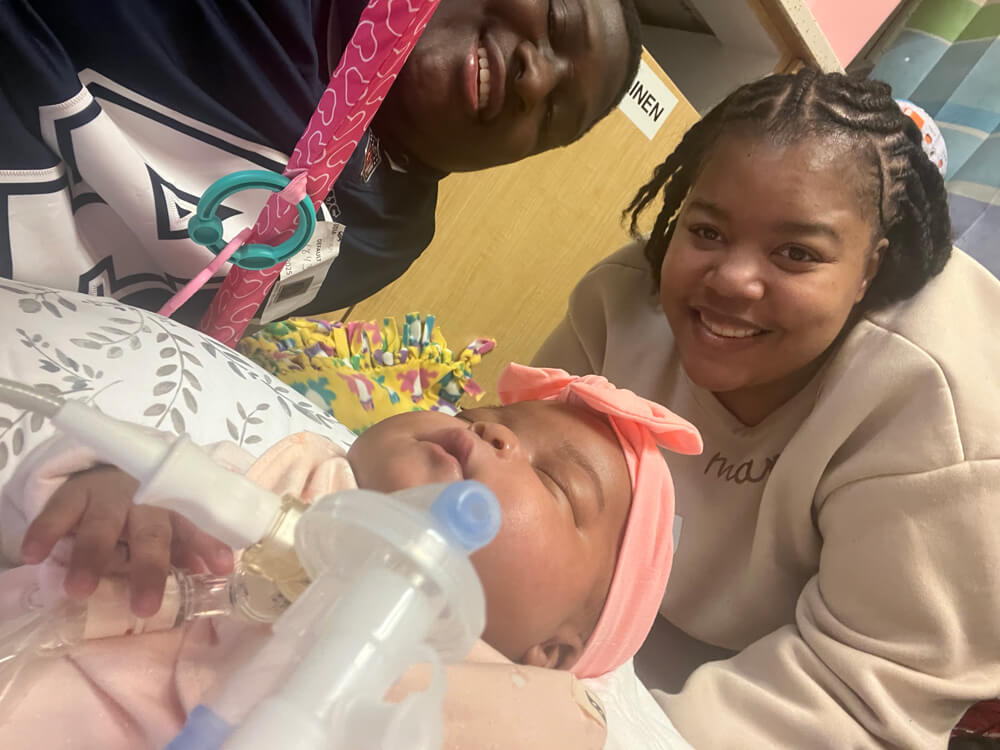
Jadai received her tracheostomy on January 17, 2025. “Spending time with Sammie had prepared me as much as possible, and I tried to focus on the positives and how this would allow her to be more mobile and help her growth. We both had the same goals of getting our daughters home. Both of us were taking our daughters home on ventilators and they each had to reach 11 pounds for us to do so,” said Deja.
Deja and Samantha, who each had spent more time in the NICU with their babies than at home, began giving each other “regular respite time” and taking shifts looking out for each other’s babies. “We would be each other’s eyes and ears while one of us went home or took a break,” Deja said. “Our nurses were incredible, but it’s a whole other blessing when a fellow momma who gets it can look out for you, too. I was so grateful for the little things that made the long weeks easier – like the milestone markers that Child Life and the nurses made, the NIC-view cameras when I took a break to go home and the friendships made with other moms,” Deja said.
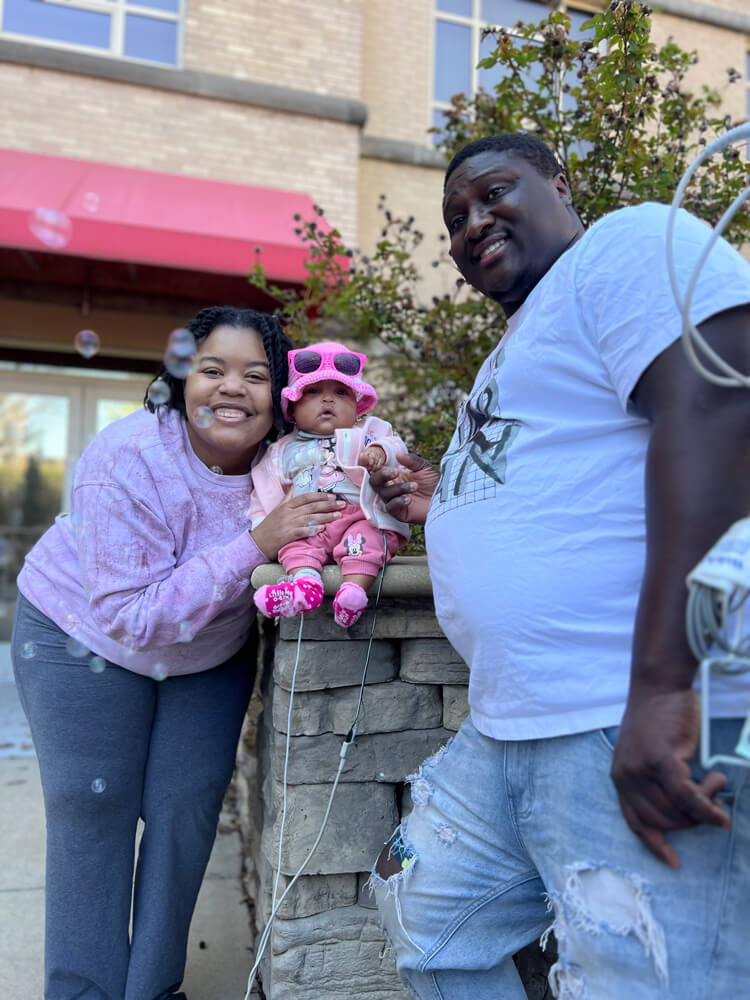
Over the next couple months, Deja and Sammie joined Facebook groups with other trach moms, researched home health options together and supported each other through the emotional and logistical ups and downs of getting a medically complex child home for the first time. “Sammie and her daughter, Josie, were discharged in March,” Deja said. “We got to see one another in April, though, because the staff had helped us arrange a playdate in the Tranquility Garden. It was great to see our girls active together, and feel hopeful about our eventual transition home,” Deja said.
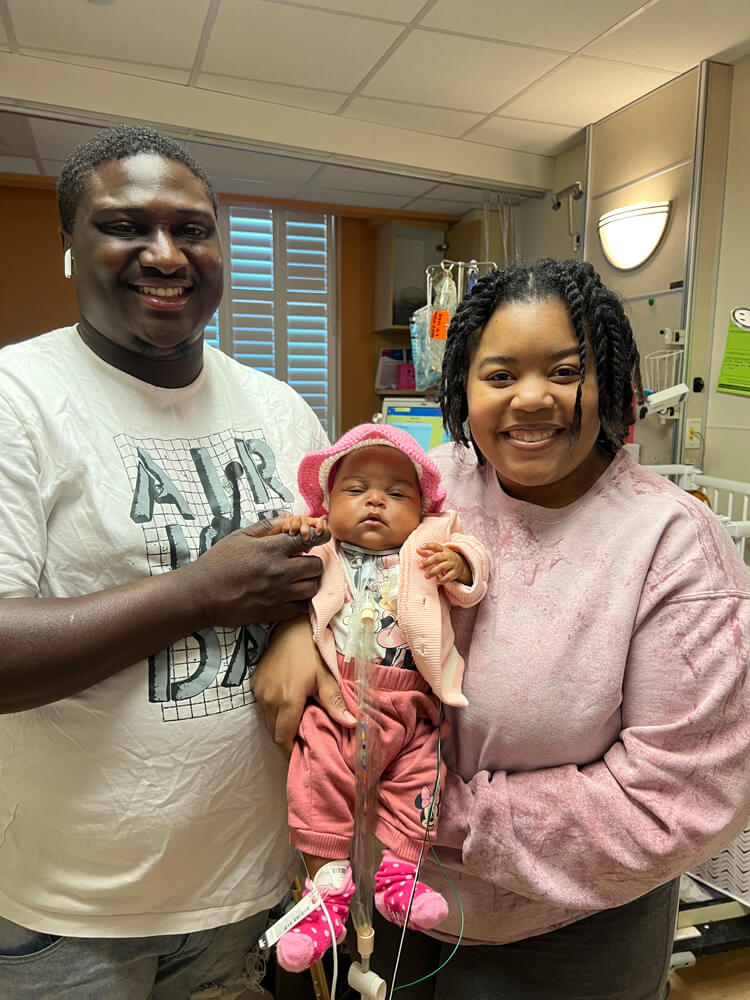
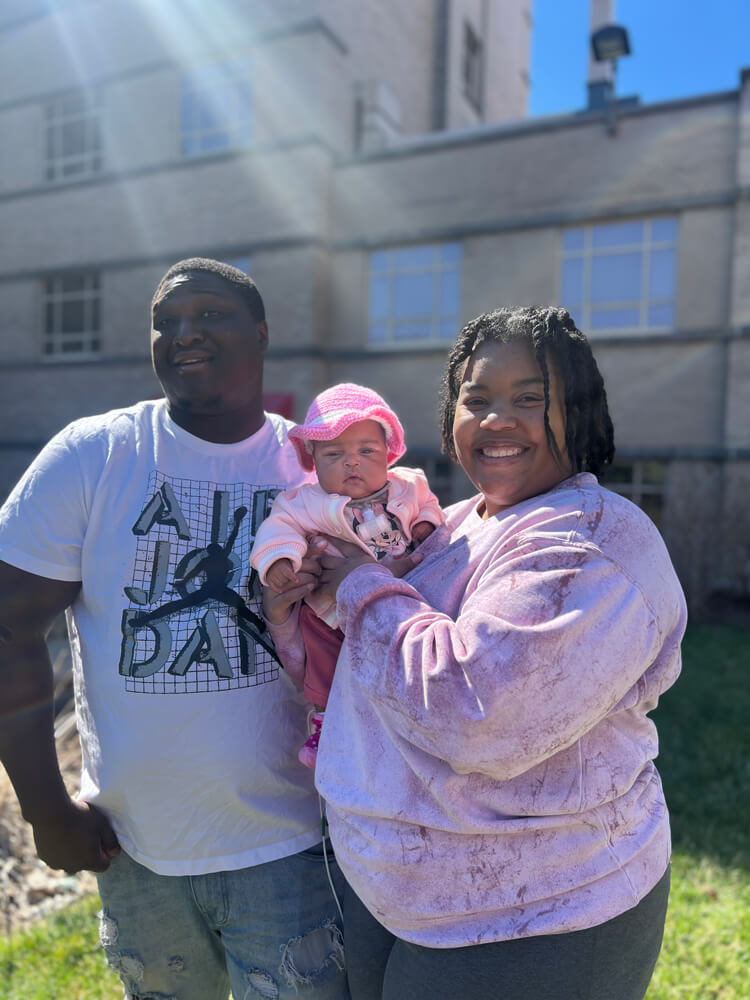
Jadai was discharged from the NICU in May 2025 after 263 days. She was on monitors, a ventilator for 8 hours at night, breastfeeding some with supplemental G-tube feedings, receiving speech, physical and occupational therapies and had scheduled follow-ups 1-2 times monthly with at least 3-4 specialty clinics. “I only had home health nursing support for the first week,” Deja said. “Since that week, I’ve managed her care on my own. Jadai’s dad travels a lot for work, but I am blessed to have support from my mother and younger sister.” When asked about challenges she’s faced since discharge, Deja answers with the poise and calmness of someone who has managed a medically complex child for much longer than a few months. “We are part of Complex Care Program, and follow up with NICU, Pulmonology, Ophthalmology and Cardiology. We’ve gradually transitioned Jadai to table food, and the big goal is to get her off her ventilator. She sometimes forgets to take deep breaths, and I had one scare where I felt I needed to call 911,” said Deja. “But we are part of the STARS program, and they came right away. We met our district’s ambulance folks because they had come to the house when we first got home from the hospital. They checked her out, acknowledged my concerns and while they offered to take her to the hospital, they reassured me she was alright,” Deja said. “Other than that time, we really haven’t had any emergencies or crises. I DO keep her in a bubble, though,” Deja laughed. “She’s come so far, and I want to keep her as healthy as possible.”
Jadai will eventually need tracheal reconstruction surgery to address anatomical challenges that keep a ventilator part of her care. “If I had to say the thing I look forward to the most, it’s not so much getting rid of equipment, although that’ll be nice, too,” Deja laughs. “It’s one day being able to hear her voice,” Deja said. “She’s had so much intervention and swelling, and I’ve never really heard her cry or laugh. That’s what I look forward to the most – that and being able to support other families with the knowledge I’ve gained.”
While caring for Jadai, Deja has been attending on-line school and will graduate with her associate’s degree in social work this May 2026, approximately one year after they were discharged from the NICU. “I’m optimistic about where Jadai will be once I graduate. There was a purpose for both of us in all of this,” said Deja. “I am excited to see how we each blossom and use this for good in the years to come.”