Our Patients:
Aurora Brewer

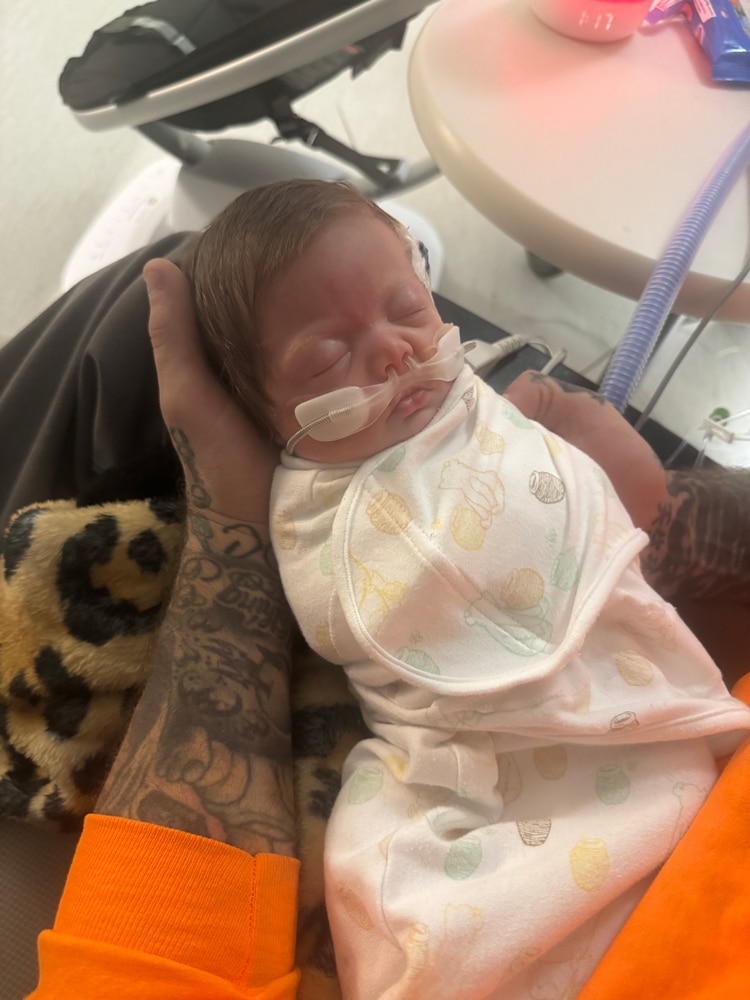
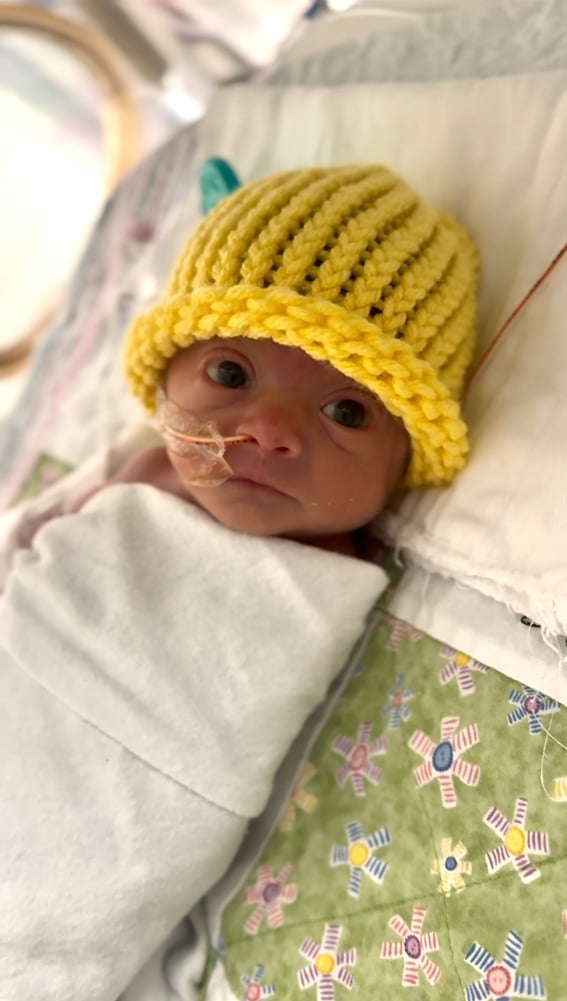
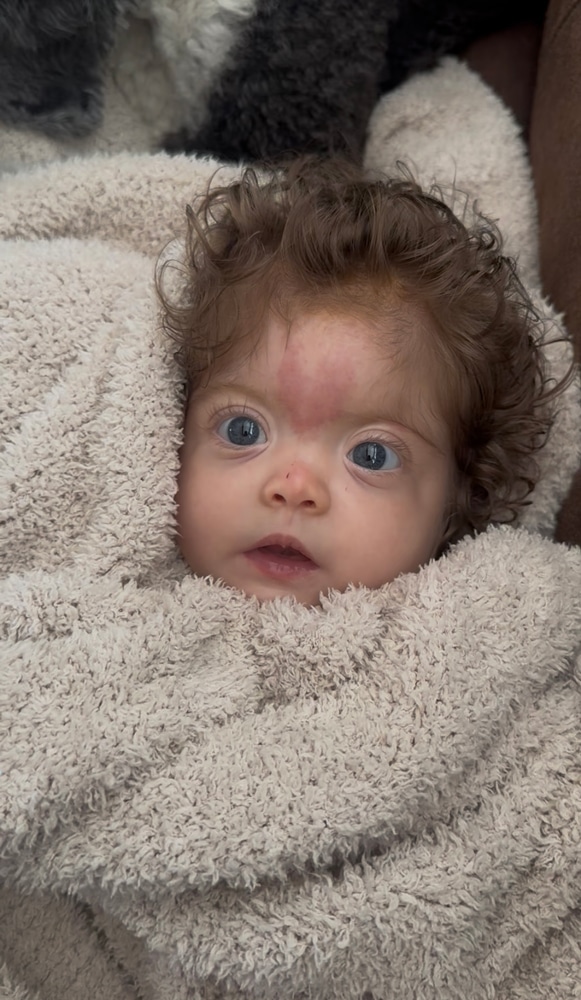
Aurora—known lovingly as Rory—entered the world earlier than anyone expected. From the very beginning, her story and life would be anything but simple.
For parents, Samantha and Dylan, Rory is their only child. Early in their relationship, Sam became pregnant with twin boys, whom they lost at 6 and 16 weeks. After time to heal, they planned for another child, and that blessing – was Rory. Samantha’s pregnancy felt reassuringly routine—genetic testing was normal, and her 20-week anatomy scan showed no concerns.
But in mid-November of 2024 at 33 weeks, everything changed.
Sam went into preterm labor and first went to a nearby hospital before being transferred to SSM Health St. Mary’s. An ultrasound raised a subtle concern—Rory’s head was measuring larger than her body—but nothing definitive. Sam was sent home with instructions to follow up. Just hours later, she returned. Her water had broken, and Rory’s foot had already emerged. She was eight centimeters dilated on arrival and rushed to the operating room within minutes for an emergency C-section.
Rory was born, weighing just 3 pounds, 14 oz.
What was expected to be a short NICU stay quickly became far more complex. Rory spent two months in the St. Mary’s NICU, where she faced a series of serious complications, including blood sugar instability, sepsis, Klebsiella pneumonia, and necrotizing enterocolitis (NEC). Near the end of that stay, her condition deteriorated significantly and a critical decision was made to transfer her to SSM Health Cardinal Glennon Children’s Hospital. “For us, it was the best blessing in the world,” Samantha remembers.
Under the care of the Cardinal Glennon NICU, Rory stabilized within two weeks and was able to be discharged home. But her medical journey was just beginning.
Within a week of returning home, Rory stopped eating. She continued to struggle with hypoglycemia and lost nearly a pound. She was readmitted to Cardinal Glennon—this time to 2 South—for failure to thrive. It was here that a broader, more complex picture began to emerge.
A multidisciplinary team of specialists was consulted, including pediatric neurologist Dr. Ali Jamal. While Rory had undergone standard genetic testing both prenatally and during her NICU stay, Dr. Jamal recognized the need for something more comprehensive. He successfully advocated for full genome sequencing, which was completed when Rory was four months old.
At six months, her family finally had an answer. Rory was diagnosed with Shashi-Pena Syndrome, an ultra-rare neurodevelopmental disorder caused by a mutation in the ASXL2 gene. Fewer than 50 individuals worldwide have been diagnosed, and Rory is the youngest known patient. The diagnosis brought clarity—but not simplicity.
Shashi-Pena Syndrome affects multiple body systems, requiring highly coordinated, ongoing care. Rory’s clinical needs include hypotonia, developmental delay, difficulty regulating blood sugar, congenital heart defects, sleep apnea, hearing loss, visual impairment, and severe gastrointestinal dysmotility. There is currently no cure and treatment is focused on managing each condition individually.
With that reality, Rory’s care quickly expanded into a carefully coordinated network of specialists. She is part of the hospital’s STARS program and with oversight from the Complex Medical Care program, she is followed by more than ten subspecialties—Cardiology, ENT, Endocrinology, Pulmonology, Gastroenterology, Neurology, Ophthalmology, Orthopedics, Genetics, and Therapy Services including physical and occupational therapy.
She sees ENT for sleep apnea and mild hearing loss, Endocrinology for blood sugar instability and hyperinsulinemia, and Cardiology for monitoring her three congenital heart defects and pulmonary hypertension. Orthopedics managed her hip dysplasia, and monitors her for bone fragility and scoliosis, while Neurology follows her hypotonia and developmental delays. Pulmonology supports her weak lungs, Ophthalmology monitors her nystagmus and low visual acuity, and Gastroenterology manages severe gastric motility issues with chronic pain.
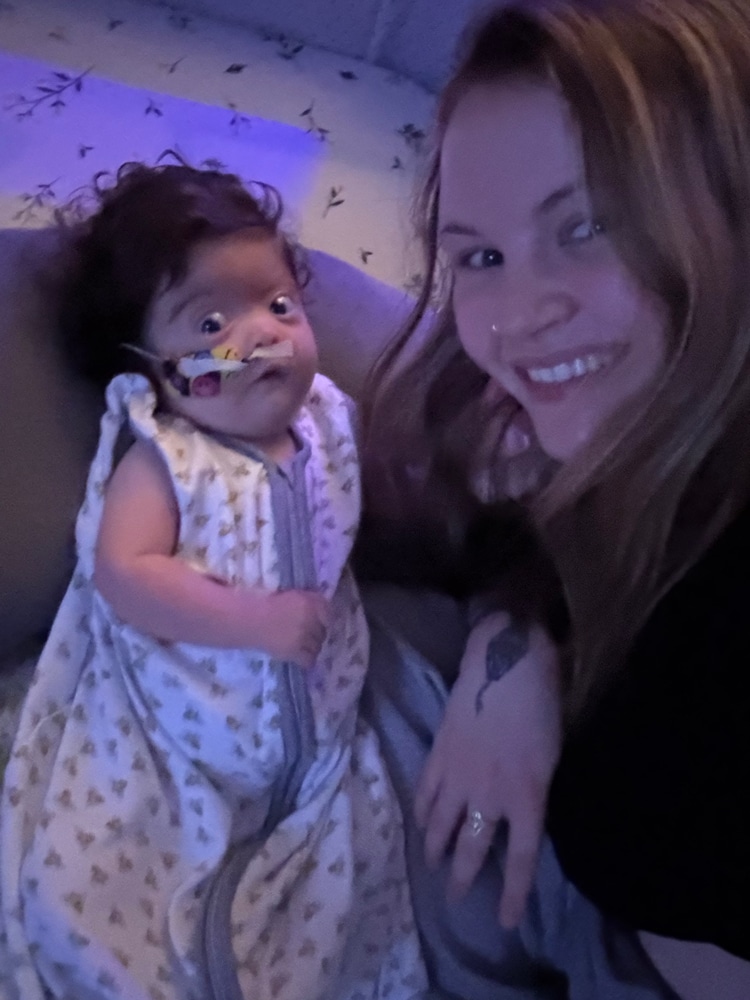
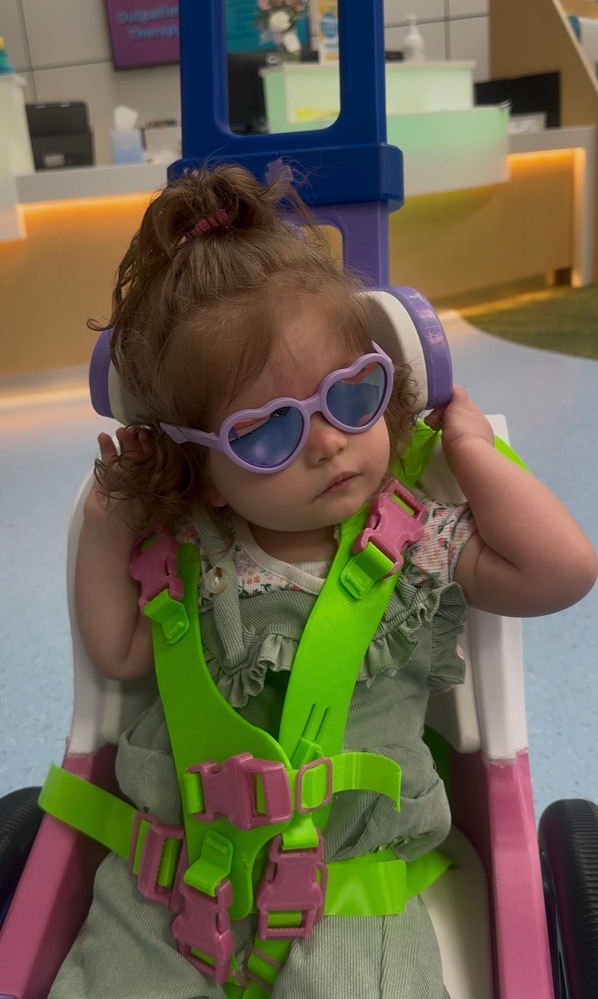
Rory is nonverbal, uses a wheelchair, and relies on a G-tube for nutrition. She attends therapy three days a week at Ranken Jordan, receives vision therapy through Delta Gamma, and is awaiting further developmental evaluation through the Knights of Columbus Developmental Center.
Despite the complexity of her care, Samantha is clear about one thing—they are not navigating it alone. “I can’t imagine what we would have done without our Complex Medical Care team,” she says. “They’re our quarterback. They’ve advocated with our insurance company for medical supplies, coordinated referrals for therapies and evaluations, and streamlined communication across so many specialists. They make this manageable.”
Through that coordinated support, Rory has not only been cared for—she has been empowered. “I never would’ve known someone could 3D print a wheelchair for my daughter,” Sam shares. “Or that she could learn to push herself in a power wheelchair. Those opportunities came because of the therapy and advocacy we’ve received.”
Beyond the hospital, Samantha has also found connection in the rare disease community. After Rory’s diagnosis, she became active in support networks, social media groups and organizations like the ARRE Foundation, which brings families and researchers together to advance care for ASXL-related disorders. Through this work, Rory will participate in a clinical research study at UCLA. Samantha also received an advocacy award at the annual ASXL Research Symposium and Family Conference in 2026 for sharing her story on TikTok (@resilientrory). Doing so has fostered connections with other families and brought awareness to both Rory’s syndrome and the life of special needs and medically complex families.
Still, at the heart of it all is Rory—and the life her parents have built around loving and advocating for her. “Rory is my whole world,” Samantha says. “I feel so lucky God chose me to be her mom. I truly believe we were given Rory because she needs all the love we have to give.”
That love shows in every sacrifice. Since she was born, Sam and Dylan have only been on two dates—every day centered on Rory’s care, progress, and future. And in a way that feels almost meant to be, Dylan now plays a role in building the place that has become central to their lives. Through his work in construction, he has worked on the majority of the drywall installation for Cardinal Glennon’s new 14-story hospital tower.
“It’s ironic,” Samantha says. “Because this is the place that will be our second home for the rest of Rory’s life.”
Rory’s journey is one of extraordinary complexity—but also of profound purpose. For Samantha and Dylan, each challenge has been met with resilience, guided by a team at Cardinal Glennon who sees Rory not just for her diagnoses, but for who she is. “At Glennon, we have found so much more than medical expertise—we have found partnership, advocacy, and a place where our daughter is deeply known and cared for. Everyone knows us when we walk in at the front entrance and they know the little things about her – like that she loves hard core metal music and Cheeto puffs. One of the chefs even makes a custom quesadilla for me when I visit the cafeteria,” Samantha says. “Those little gestures and comforts mean so much in a world that can be so complicated.”
In many ways, it feels as though they were chosen for Rory—and she, for them. “As Rory’s story continues to unfold, we know Cardinal Glennon will be there every step of the way,” Sam says—”not just as a hospital, but as a second home for life.”