Our Patients:
Leo Gardner
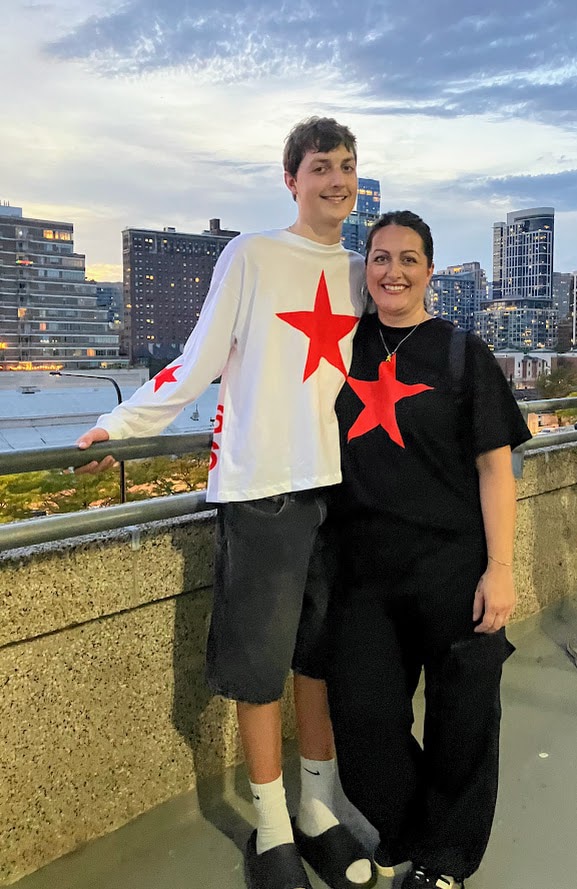
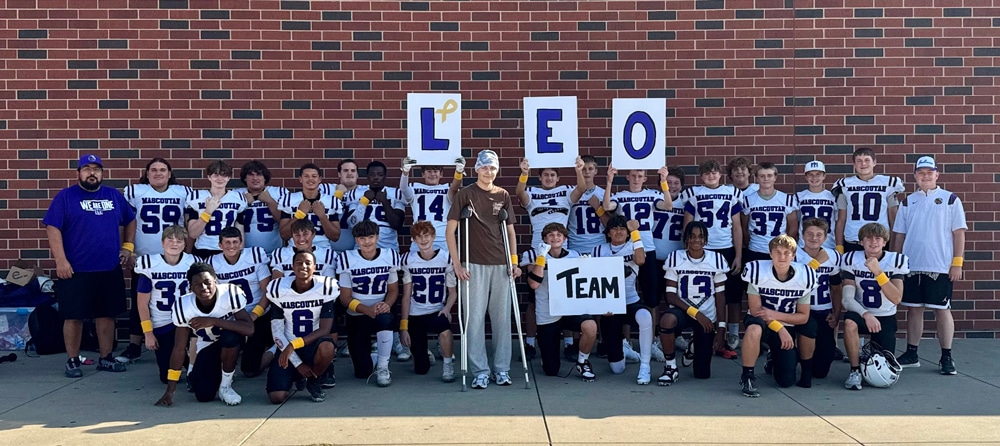
Before cancer entered his life, 14-year-old Leo Gardner was rarely sitting still. The Belleville, Illinois teen spent his days playing basketball at neighborhood courts and local playgrounds, hanging out with friends and making frequent stops at Chick-fil-A and Walmart. Life revolved around sports, school and family, including his parents, Danielle and Nathan, and his younger brothers, Vinnie (10) and Roman (1).
So, when Leo began experiencing pain in his left hip during the spring of his eighth-grade year, it immediately felt different.
“I had to stop halfway through the 40-yard dash in PE because I couldn’t run anymore,” Leo recalled. “That wasn’t normal for me at all.”
At first, the pain came and went. Leo’s parents monitored the symptoms – keeping an eye on him and asking him how he was feeling. “We assumed it was growing pains or sports-related,” Danielle said. “But over the next couple months, the discomfort persisted.” Looking back, Danielle remembers other subtle warning signs. “He was getting sick more often than usual and couldn’t keep weight on,” she said.
By the end of May 2025, the pain had become impossible to ignore. It was waking Leo at night and making it difficult to walk. An initial X-ray appeared normal, but his pediatrician referred him to an orthopedic specialist at SSM Health Cardinal Glennon Children’s Hospital. The family had a vacation planned for Branson before the appointment. They decided to go and make the best of it, but instead of enjoying nightly activities, Leo spent most of the evenings sitting on the sidelines, relying on ibuprofen to get through the day. “Thinking back, we didn’t realize how uncomfortable Leo really was,” Danielle said. “He was so tough and didn’t like to complain, so he just pushed through the pain and tried to have the most fun he could, even while hurting.”
Everything changed when they returned.
On June 18, Leo met orthopedic specialist Dr. Sivashanmugam Raju at SSM Health Cardinal Glennon. After reviewing a new X-ray, Dr. Raju discovered an abnormality in Leo’s pelvis and ordered an MRI for the following day.
On June 19, while Leo was still completing the scan, Dr. Raju and his nurse came out to speak with Danielle. “I knew that couldn’t be good,” she said.
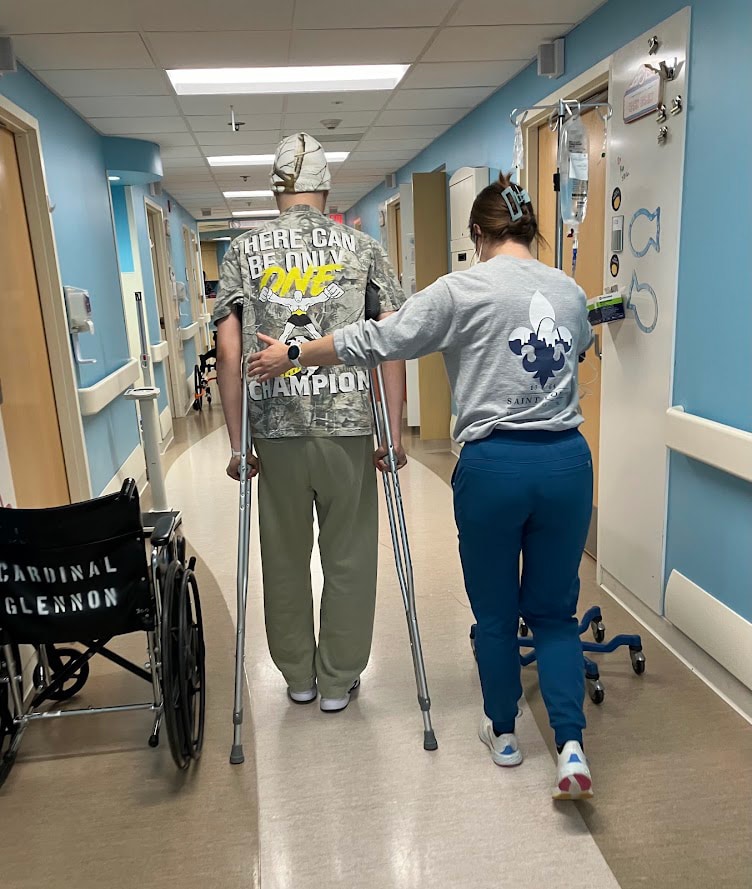
Dr. Raju explained that the imaging findings were serious and that he was highly suspicious Leo had Ewing sarcoma, a rare cancer that develops in bone or soft tissue and most commonly affects children, teens and young adults. Dr. Raju gave Leo crutches with strict instructions to stay off his left hip and leg. He then made arrangements for Leo to see Dr. David Greenberg, orthopedic oncologist, the next day.
That evening, Danielle and Nathan told Leo he would be seeing another specialist the next morning. They didn’t yet share the possibility of cancer, but they knew their family was about to face a life-changing journey.
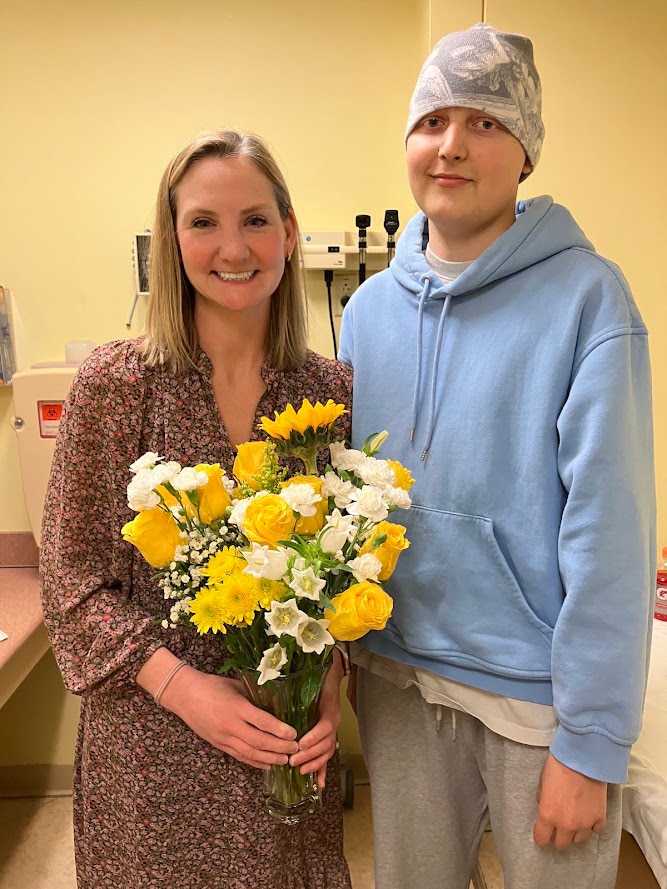
On June 20, Leo met with Dr. David Greenberg and pediatric hematologist-oncologist Dr. William Ferguson. Together, they reviewed the imaging and confirmed that the mass was highly suspicious for Ewing sarcoma. Additional testing, including a biopsy, PET scan and chest CT, would be needed to establish a final diagnosis.
“The urgency was terrifying, but we were so thankful,” Danielle said. “Dr. Greenberg left a conference he was attending to come to evaluate Leo. That showed us their commitment to our family. What hadn’t felt real in the previous days suddenly became our reality.”
One week later, Leo underwent a tumor biopsy. Then came one of the hardest parts of the family’s journey: waiting. “We had to wait a week for results, and that was one of the hardest parts of this whole experience,” Danielle said. The call finally came on July 3 from Dr. Maggie Cupit-Link, pediatric hematologist-oncologist at The Costas Center at SSM Health Cardinal Glennon Children’s Hospital. The biopsy had revealed a tumor within the Ewing sarcoma family of cancers. A few days later, additional imaging confirmed the disease was localized to Leo’s pelvis. Dr. Cupit-Link officially diagnosed Ewing sarcoma and began discussing treatment.
Suddenly, conversations no family expects to have with a 14-year-old became part of everyday life: Chemotherapy. Radiation. Surgery. Fertility preservation.
Everything moved quickly. Leo had a port placed and underwent a bone marrow biopsy on July 15. Fertility preservation followed the next day, along with the start of his first chemotherapy cycle. “For the first month, I couldn’t tell reality from a nightmare,” said Leo. “Everything was kind of a big blur, and I wasn’t really scared because I didn’t understand. It didn’t feel real.”
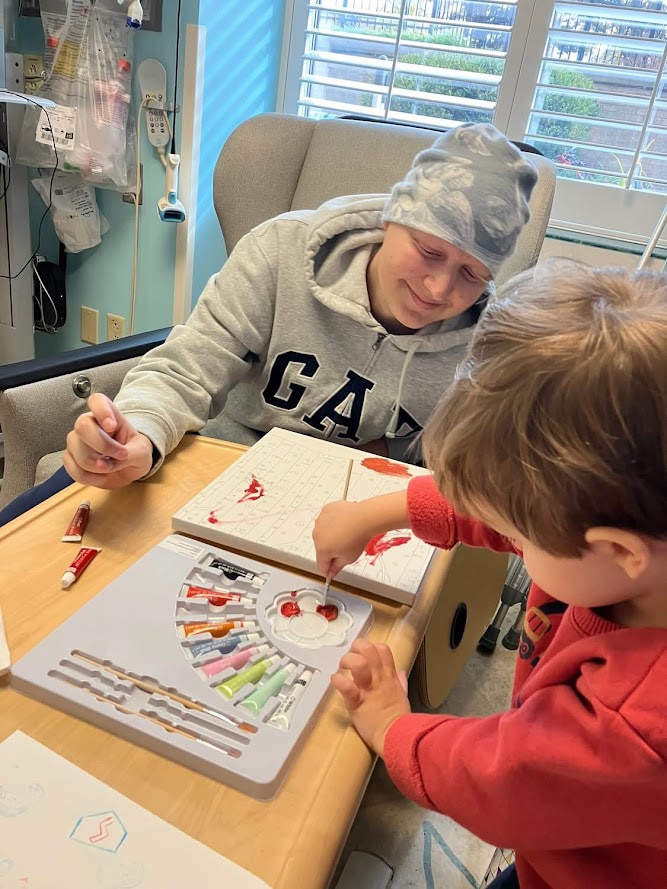
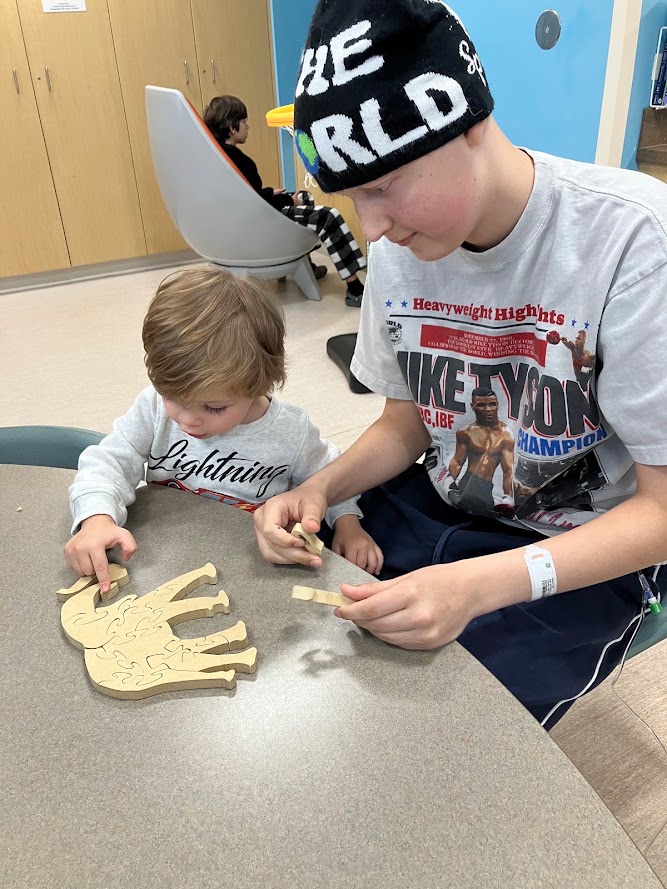
Over the following months, Leo endured an intense treatment schedule that would challenge even the strongest adults. His chemotherapy was all impatient with stays every 2 weeks for about 7 months. He received 14 rounds of chemotherapy, spent 43 nights in the hospital, underwent dozens of radiation sessions and blood transfusions, relied on crutches for more than 200 days and faced ongoing physical therapy.
In October, Leo and his family reached one of the most significant decisions regarding his treatment. Because the tumor was located in his pelvis, surgery would require extensive reconstruction, including replacement of his hip with a custom pelvis prothesis. The operation would remove the cancer but permanently limit his physical activity, making sports impossible in the future. The alternative was radiation therapy. Radiation offered the possibility of eliminating the tumor while preserving more of Leo’s mobility, though it carried long-term risks of arthritis and the possibility of future hip replacement.
Danielle recalls, “I remember wondering how many cancers we were supposed to be willing to let Leo be subjected to. We were told that one of his chemo meds and now radiation carried the risk of causing two more cancers and that was absolutely terrifying.” But for Leo, the choice wasn’t made for him. “Leo had a lot of input into that decision,” Danielle said. “He carefully talked through all the pros and cons and felt radiation was the best-informed decision for him.”
Beginning October 22, Leo underwent 31 radiation treatments over six weeks while continuing chemotherapy. “One of our favorite things to do during the fall months of radiation was to go to the zoo since it was nearby and we were there so often,” Danielle said. “Leo loves animals and he always found peace at the zoo.”
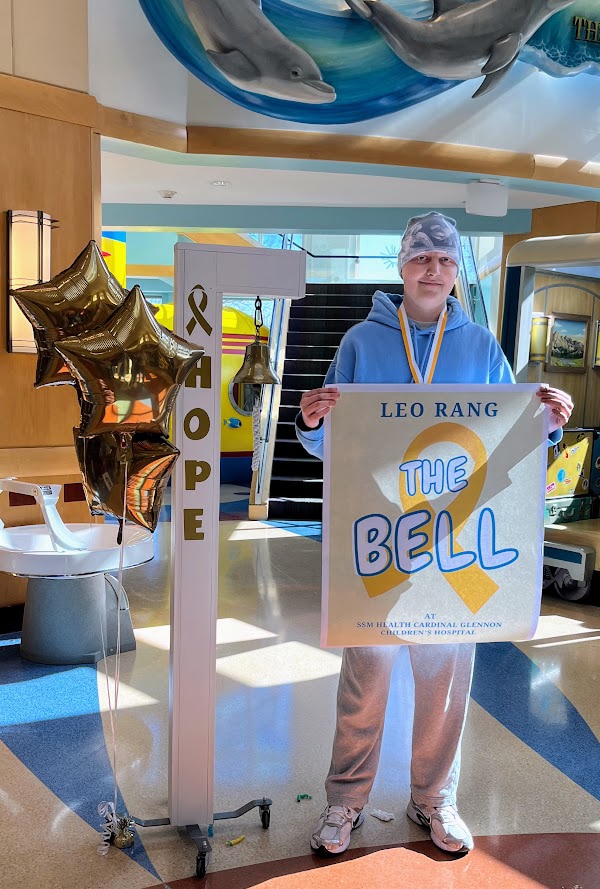
Leo rang the bell when radiation ended in December. Then he rang it again, surrounded by Dr. Maggie and many of the nurses who helped to save his life, on February 9, 2026, after clear scans confirmed his treatment had been successful.
Despite everything that cancer took away, Leo refused to let it define him. Danielle credits much of his resilience to an outlook rooted in optimism and self-belief. “He believed in manifestation and positive self-talk,” she said. Leo approached each challenge with a simple philosophy: “If you want good, think good,” he said. “The more you tell yourself things are going to be good, the more they’ll come through.”
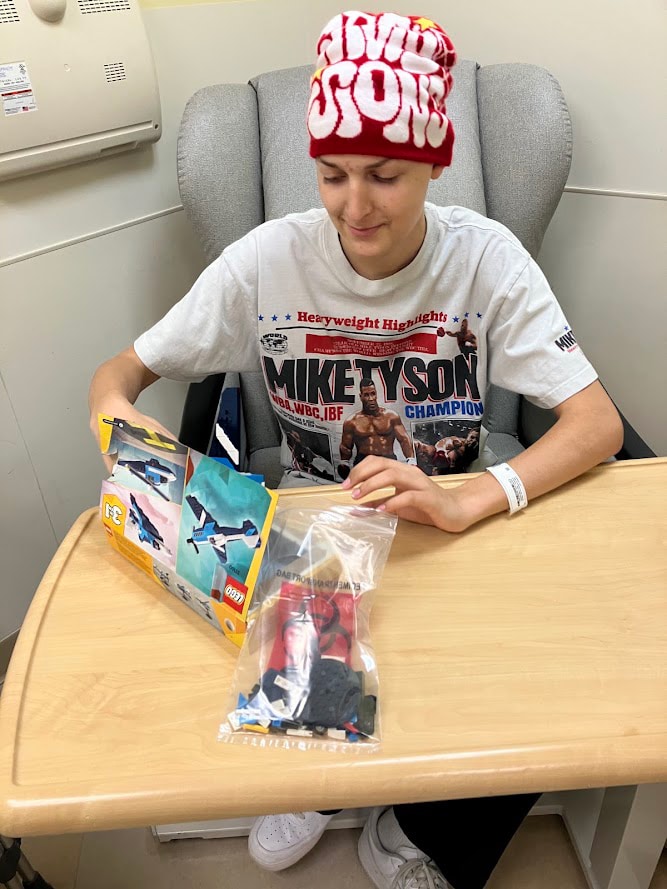
He remembers refusing to let himself dwell on fear or sadness. “I didn’t allow myself to sit in sadness,” Leo said. “I stayed future-driven because I believed I had a future, and my doctor believed in it too. Her faith, positive attitude and confidence made a big difference for me.” Things that also fed Leo’s interest and positivity throughout treatment included LEGO sets….LOTS of legos…. video games with his brother, Vinnie, and Spider-Man. “Leo has loved superheroes since he was really little, with Spider-Man being his favorite for a long time,” Danielle said. “I have to say, though, after witnessing Leo fight through cancer – that Leo’s favorite superheroes have nothing on him now.”
The Gardner family also found support from countless people and organizations, including Friends of Kids with Cancer, Kellsie’s Hope Foundation, The Bennett Project, Bear Necessities Pediatric Cancer Foundation, Casey Cares Foundation, the St. Louis Peregrine Society, One Ribbon United and many others. And they experienced an outpouring of generosity from family, friends, neighbors and their hometown community. “Cancer is devastating to a family,” Danielle said. “But I do believe we’ve seen some good.” One unexpected blessing was watching Leo’s relationship with his youngest brother grow stronger. Because treatment required homeschooling for much of what would have been Leo’s freshman year, he spent more time with Roman than ever before. “Roman was a motivator for Leo,” Danielle said. “Leo wanted to be strong for his little brother.”
Just six weeks after completing chemotherapy, Leo returned to school and finished the year on pace with his classmates. His first post-treatment scans in May 2026 were clear. Shortly after, his port was removed on June 1, the first day of National Cancer Survivor Month.
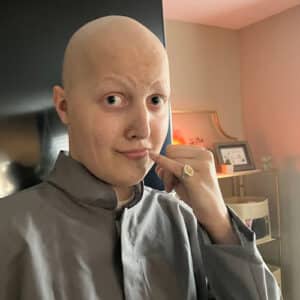
“When the first post-treatment scans were clear, we thought about what that meant in that moment,” Danielle said. “It meant Leo could breathe. Leo could be a teenager. Leo could learn to drive. Leo could go to school in person. Leo could hang out with friends. Leo could stop taking so many medications. Leo could feel better. Leo could grow his hair back. Leo could do what he wanted. He could LIVE. It meant Mom, Dad and brothers could breathe. We could watch Leo do everything he wants to do. We could watch him transform back into himself and not just be a cancer diagnosis. We could say yes to things we hadn’t been able to do in a while. We could all sleep under one roof. It meant we would never take each other for granted and we would continue to love each other harder than we ever knew possible. It meant there was no evidence of disease now and there should be no evidence of disease ever again, but it is still possible, and he still faces possible complications an long term side effects of the incredibly powerful and toxic chemotherapy that his body had so much of.”
When Leo was diagnosed, doctors warned that he might never run, jump or return to many of the activities he loved. At one point, he was taking an average of 16 medications a day. Today, now 16 years old, his reality looks very different and as of September 2026, Leo’s scans remain clear. He’s lifting weights, jogging, exercising regularly and continuing physical therapy to build strength. He’s off all medications and returns to The Costas Center every three months for follow-up care. “Because of being on crutches for almost 7 months, having a mass still in his ilium, radiation damage and still recovering from tons of chemotherapy, the physical therapy should make a big impact on his body. The hope is for him to keep getting stronger and more limber and have movement without triggering pain daily,” Danielle said.
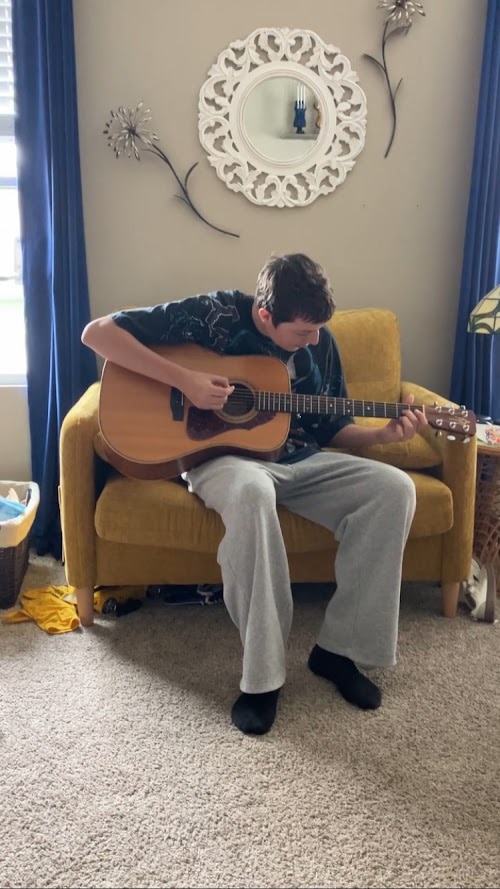
Leo has also rediscovered another passion: music. Before cancer, music often took a back seat to basketball and sports. Now, Leo spends time playing guitar and piano and dreams of one day becoming a music producer. “I’m a visionary. I don’t dwell on the past. I live in the present and always think of my future,” said Leo.
For a teenager who faced one of the toughest diagnoses imaginable, the future once again feels full of possibility. “We will continue to pray and continue to celebrate his life and all the amazing things he has to look forward to,” Danielle said. And if Leo’s positivity throughout treatment is any indication, he’s just getting started.