Our Patients:
Olivia Spiess
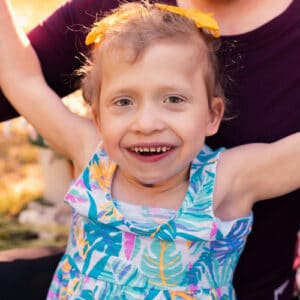
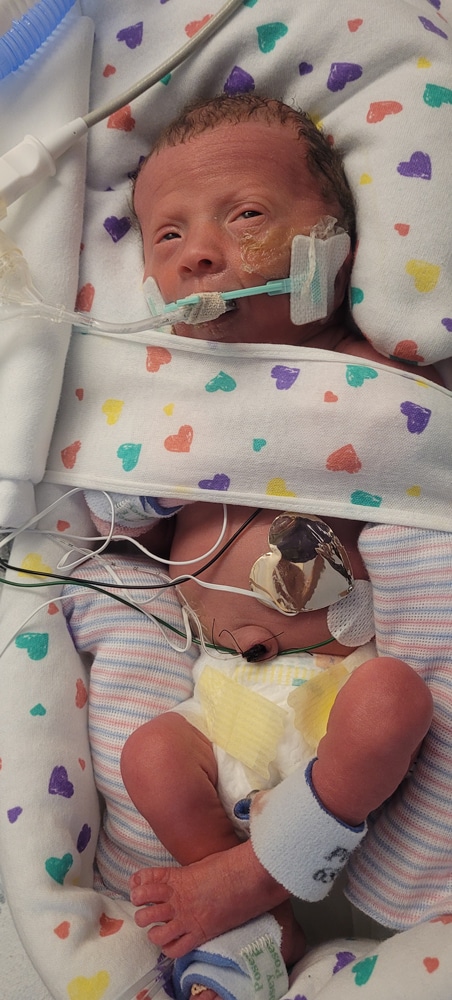
Olivia Spiess was born at 30 weeks’ gestation in January 2021, the youngest of four children to parents Gretchen and Don. Following a pregnancy complicated by pre-eclampsia and COVID infection, Gretchen, delivered Olivia by emergency C-section, and from her first moments of life, Olivia faced extraordinary challenges. She struggled to breathe at birth, requiring prolonged manual ventilation before a breathing tube could be secured—an early sign of her complex and atypical airway.
In the days that followed, her medical picture grew more complicated. Olivia was diagnosed with multiple congenital anomalies, including cardiac defects with pulmonary stenosis, a ureterocele, obstructive sleep apnea, and hearing loss. Due to the severity of her airway instability, she was transferred to the Level IV NICU at SSM Health Cardinal Glennon Children’s Hospital, where her care would be anchored moving forward.
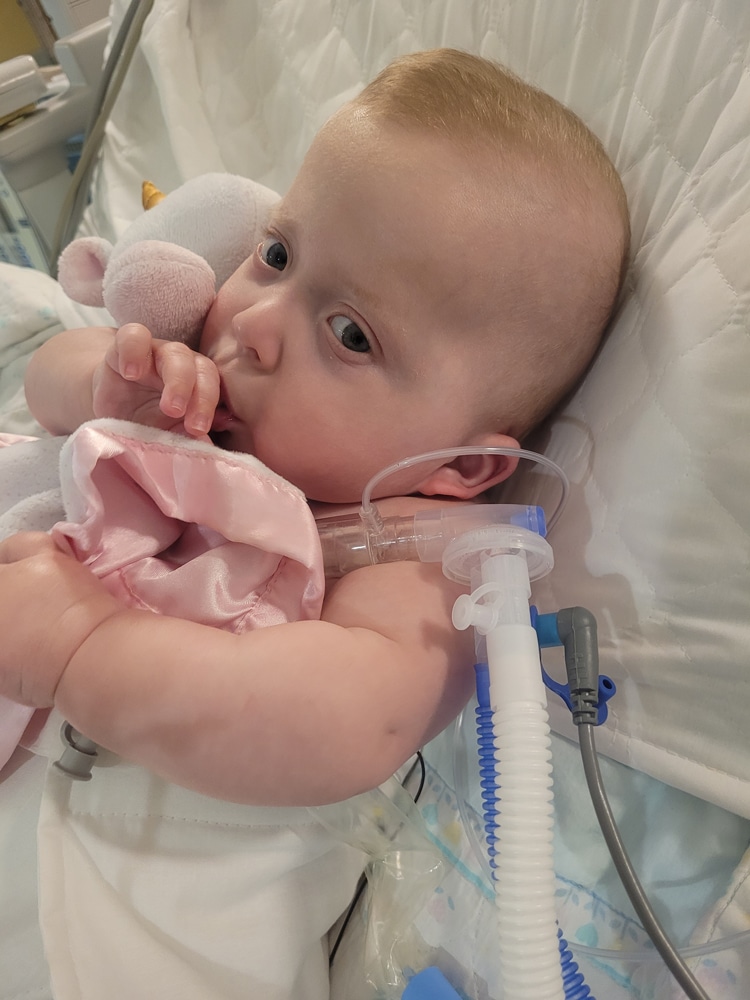
At just eight weeks of age, Olivia underwent multiple critical procedures: placement of a tracheostomy, a gastrostomy tube for feeding, and surgical repair of her ureterocele, followed shortly by a balloon valvuloplasty to address her pulmonary stenosis. Despite these interventions, her condition remained fragile, prompting her care team to search for an underlying unifying diagnosis.
Gretchen and Don were told that Olivia might likely have a RASopathy. RASopathies are a group of genetic conditions caused by mutations in the genes of the RAS/MAPK cell signaling pathway. This pathway controls crucial cell functions like growth, division, and death. While each syndrome has unique traits, they share many overlapping features such as craniofacial anomalies, cardiac defects, developmental delays, growth issues and skin and musculoskeletal abnormalities – just to name a few. Combined the RASopathies represent one of the largest groups of congenital anomaly syndromes, affecting about 1 in 1,000 newborns. They are also lifelong conditions with no cure. Treatment is tailored to the individual’s specific symptoms and often involves a huge team of subspecialists for ongoing health management.
Advocating for answers, Dr. Stephen Braddock, Director of Medical Genetics, expedited a RASopathy panel as Olivia’s condition continued to decline with complications including pleural effusion with chylothorax (lymphatic fluid leaking into the space between the lungs and the chest wall) and ventilator dependence. For Gretchen—Olivia’s mother and a molecular biologist—the search for a diagnosis was deeply personal as well as scientific. With professional insight into genetic disease, she understood the urgency and complexity of what her daughter was facing and became a passionate partner in the pursuit of answers. This testing ultimately revealed cardiofaciocutaneous (CFC) syndrome caused by a BRAF mutation—a rare genetic condition explaining her complex constellation of symptoms. The pulmonary lymphangiectasia Olivia exhibited is considered an “ultra-rare” manifestation within the CFC syndrome with only a very small handful of cases noted globally.
Recognizing both the severity and rarity of Olivia’s condition, Dr. Kimberly Spence, her neonatologist, urgently sought solutions beyond the walls of the NICU. She reached out to national experts and identified a specialized lymphatic team at the Children’s Hospital of Philadelphia (CHOP), capable of both diagnosing and treating Olivia’s complex lymphatic disorder, as well as offering access to emerging therapies.
Before Olivia left St. Louis for advanced care, her NICU team created an unforgettable moment for her family. Because COVID restrictions and her critical condition had kept her siblings from meeting her, the team including but not limited to her neonatologist, respiratory therapist, Child Life Specialist and trach specialist coordinated a special visit—transporting Olivia, along with all of her life-sustaining equipment, to a private space where her family could finally be together. It was a deeply meaningful moment, offering connection and comfort before an uncertain next step. “One of the NICU nurses even made a special outfit for her to wear so that we could capture family photos,” Gretchen said. “We had no idea what we were headed into. They made sure we had time as a family, and I’ll never forget that moment in time that they gave us.”
At CHOP, Olivia underwent specialized lymphatic imaging and intervention, including lymphangiography and repair of leaking vessels. In collaboration with her Cardinal Glennon team, she was started on trametinib—an innovative, targeted therapy – through a compassionate use pathway. The family had two choices – to either move to Philadelphia where they would oversee her care – or have her Glennon team obtain IRB approval for her to receive the drug locally with oversight of her care per the trial guidelines. Dr. Michael Smiley, Olivia’s pulmonologist assumed that duty and Olivia’s care was then transitioned back to St. Louis, allowing her to remain close to home while continuing advanced treatment under expert local oversight.
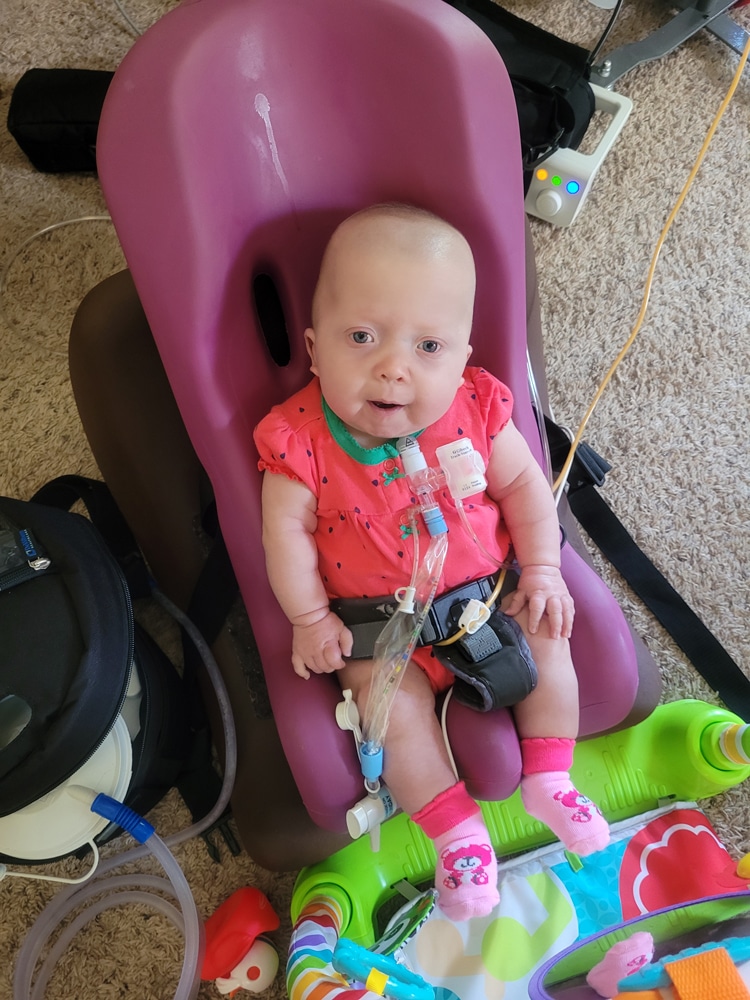
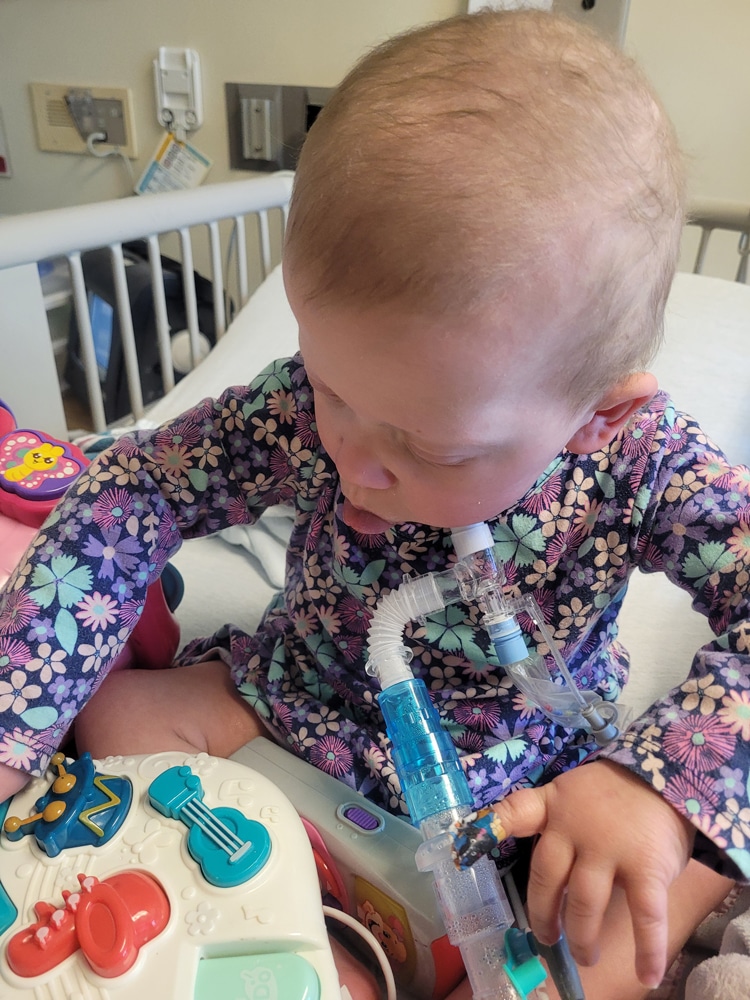
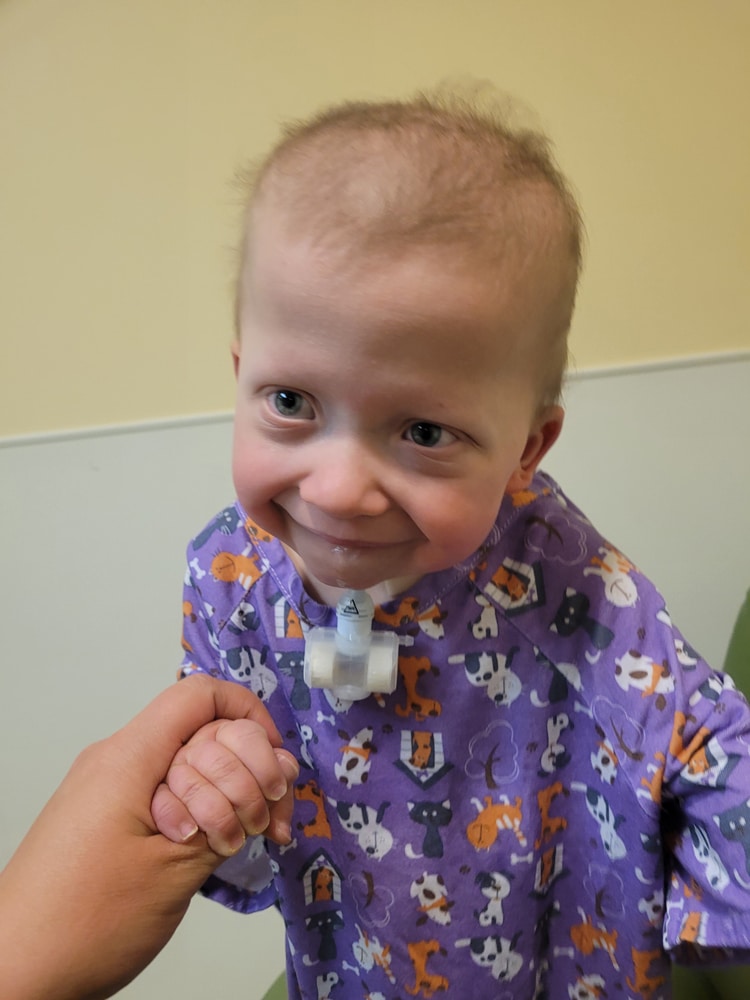
Within weeks, Olivia showed remarkable improvement—enough to come off the ventilator and eventually transition home with a tracheostomy, G-tube, supplemental oxygen, and close monitoring. However, her journey remained complex. After several months, she developed persistent, unexplained bleeding from multiple sites, leading to discontinuation of the medication and a difficult period of several months marked by increased respiratory needs and frequent hospitalizations.
Throughout it all, the Complex Medical Care Program served as Olivia’s “quarterback,” coordinating care across an extensive network of specialists and institutions. Her multidisciplinary team includes Otolaryngology, Pulmonology, Ophthalmology, Neurology, Nephrology, Urology, Allergy/Immunology, Endocrinology, Cardiology, General Surgery, Genetics, Hematology, Dermatology, Gastroenterology, and the Vascular team at Saint Louis University—along with participation in the STARS, Footprints, and Complex Medical Care Programs.
When her condition became increasingly difficult to manage, Dr. Kurt Sobush, Medical Director of the Complex Medical Care team and Olivia’s “quarterback” CMCP physician sought additional expertise, connecting Olivia with a specialized RASopathy clinic at Cincinnati Children’s Hospital. The clinic was hosted once monthly and their various subspecialists “problem-solved” challenges with children much like Olivia. Dr. Sobush and Emily Ahmad, APRN-CPNP-PC got Olivia an appointment at their clinic with hopes that they might have insight about her bleeding. With their recommendation, trametinib was reintroduced under careful monitoring—this time with sustained benefit. Her hospitalizations decreased, her respiratory status stabilized, and in 2025, she reached a major milestone: removal of her tracheostomy.
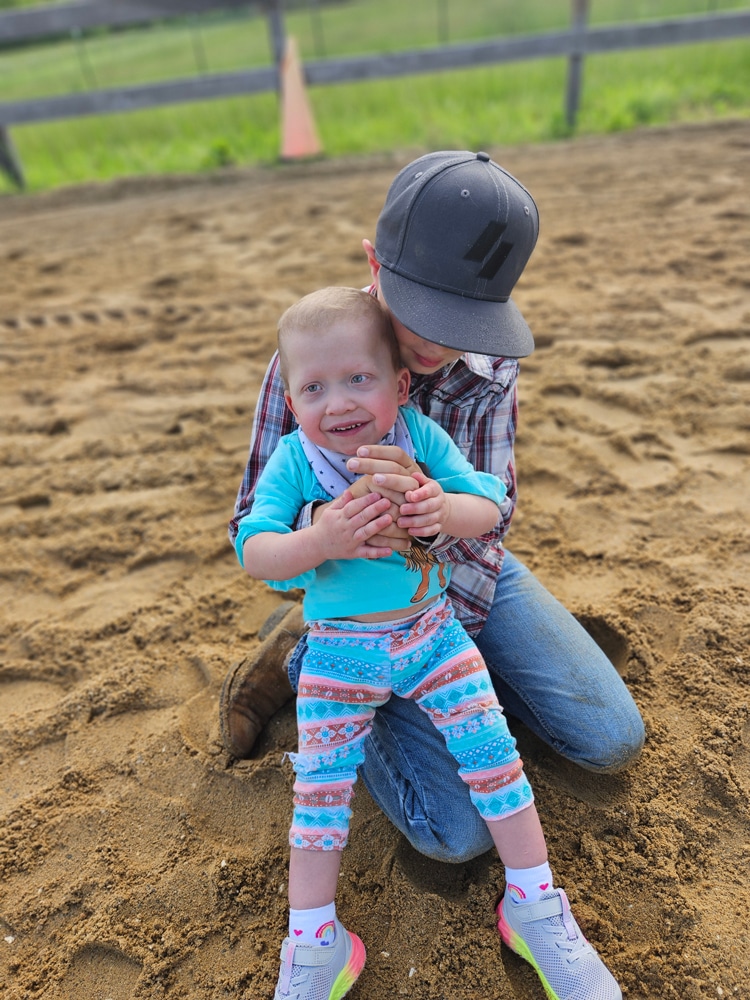
Today, at five years old, Olivia’s life is increasingly defined not by her diagnoses, but by her progress. She attends preschool, participates in therapies, is learning to eat by mouth, and can walk short distances independently. While she continues to require complex care and faces future surgeries, she is preparing for kindergarten and embracing the experiences of childhood once uncertain.
“I am so blessed to say that so much of Olivia’s day now is spent just learning to be a kid,” Gretchen shares. “Her wins over the last few years have been big ones for our family, and we don’t take any of them for granted. We are so grateful—for the Complex Care team, our Glennon family, our church family, extended family and community – everyone who has stepped in to make this journey doable.”
Olivia’s story is a powerful example of what coordinated, expert care can achieve. Through relentless advocacy, national collaboration, and unwavering support, the Complex Medical Care Team has guided her journey from critical illness to growing independence, ensuring that even the rarest and most complex conditions are met with innovation, compassion, and hope.